

Balancing AI Innovation and Timeless Tools in a Rapidly Changing Industry
Balancing AI Innovation and Timeless Tools in a Rapidly Changing Industry
I’ve been working hard to continually improve my AI skills, integrating them into my daily workflow. To be honest, I’m a self-taught videographer. 🎥 When I first started my company, I believed that daily practice with the tools you use is essential—not just to ensure you know what you’re doing, but also to deliver the quality service you promise your clients. 💡
Over the years, I’ve been hired by various companies, and during shared screen sessions, their editors have observed me at work. 💻 Many of them have commented that they’d never let anyone watch them edit. I’ve always found that intriguing and wondered why. Personally, I’ve never had an issue being transparent about my process. 🔧
When it comes to AI, 🤖 I firmly believe it won’t replace human interaction—it has limitations. But as I’ve said countless times, AI must be another tool in the toolbox. Staying relevant in the industry requires adapting to client demands, many of which now include AI-based services. My daily workflow incorporates many tools and techniques, some predating AI. However, AI has quickly become one of my top workflow preferences, as it just makes everything easier.
That brings me to a larger question: When is it too much?
Technology changes so rapidly that what you learn today can feel outdated tomorrow. I know I’m being a bit dramatic, but you get the idea. Is it worth keeping up with every technological advancement, or should we wait and adopt new tools only when necessary? 📹
Take cameras, for example. The Canon 7D 📷 was my first camera, and while it’s not my go-to anymore, I still enjoy using it. There’s something about the images it produces that I think are better. Maybe it’s nostalgia, or maybe it’s just the simplicity that reminds me of why I got into this field in the first place. 🎥
So, what’s your take? Should we chase every new tech trend, or is there understanding in focusing on the tools we know and trust until change becomes unavoidable?


Unleashing Creativity with AI: Enhancing Storytelling, Not Replacing It
Unleashing Creativity with AI: Enhancing Storytelling, Not Replacing It
When I think about creativity and storytelling, the first question isn’t “how” or “why”—it’s “why not?” Creativity is about freedom—the freedom to explore, to imagine, and to bring ideas to life. And with today’s AI-powered tools, the boundaries of what’s possible have nearly disappeared.
AI has revolutionized video production, making workflows smoother and reducing the time between concept and delivery. Automated editing, scene detection, and even voice-over generation have removed many of the tedious, time-consuming tasks, allowing us to focus on what truly matters: crafting compelling stories.
At MJRVisuals, we’ve seen firsthand how these tools can transform a project. What once took weeks can now be achieved in days, giving us more time to refine the creative details that make a story resonate with audiences. AI isn’t just a tool—it’s a creative enabler, helping us bring ambitious ideas to life faster and more effectively.
But here’s the thing: AI is a support, not the star. While it can simplify workflows and spark creative inspiration, the heart of any great story will always be human ingenuity. Creativity isn’t about taking shortcuts; it’s about using every tool available to elevate your vision. Relying solely on AI risks losing the nuances, the emotion, and the authenticity that make stories unforgettable.
That’s why we use AI to enhance, not replace, the creative process. It’s about amplifying imagination, not confining it. At MJRVisuals, we combine cutting-edge technology with a passion for storytelling to ensure every project is as unique as the story it tells.
So, unleash your creativity, embrace the power of AI, and let us help you redefine imagination.
💡 How do you use technology to fuel your creativity? Let’s start a conversation.
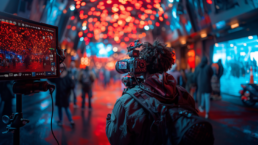
The Hidden Dangers of Relying on AI in Video Production
The Hidden Dangers of Relying on AI in Video Production
AI has undeniably revolutionized video production, offering faster workflows and smarter tools. But with great power comes great responsibility—especially for those just starting their journey in the industry. While AI makes video production more accessible, it also carries risks, particularly for new creators who may skip learning the fundamentals.
One of the biggest dangers lies in over-reliance. AI can automate tasks like editing, color correction, and even scriptwriting, but it doesn’t replace the need for a solid foundation in video production principles. Tools can fail, and creative judgment is still irreplaceable. For example, an AI might automatically adjust lighting levels, but without an understanding of composition and contrast, a producer might not realize when those adjustments detract from the story.
Another risk is homogeneity. AI relies on algorithms and data, which can lead to outputs that feel formulaic or lack creative nuance. New creators who depend heavily on AI may find themselves producing work that looks polished but lacks originality—a critical issue in a competitive field.
There’s also the issue of problem-solving. Seasoned professionals know that production rarely goes as planned. Cameras fail, audio gets corrupted, and footage needs salvaging. While AI tools can assist in these situations, they often lack the flexibility of human ingenuity. A creator unfamiliar with basic troubleshooting could find themselves stuck when the AI falls short.
For new video producers, AI should be a tool, not a crutch. Learn the basics—camera settings, storyboarding, lighting, and editing—before leaning heavily on AI. It’s the combination of foundational knowledge and cutting-edge tools that produces exceptional results.
AI is here to stay, but the key to mastering it lies in blending innovation with expertise. What do you think? Is AI helping or hurting new video creators?

How AI is Revolutionizing Video Production Workflows
How AI is Revolutionizing Video Production Workflows
In the ever-evolving world of video production, time is everything. Deadlines are tighter, expectations are higher, and budgets often demand the impossible. Enter AI—a game-changer that’s simplifying workflows and cutting down turnaround times like never before.
From automatic color grading to AI-powered video editing, these tools are no longer just nice-to-have; they’re quickly becoming essential. AI can analyze hours of footage and recommend the best clips in minutes, a task that would otherwise take hours or even days. Need captions? AI can generate them instantly. Want to add a voice-over? Text-to-speech tools are now capable of creating natural-sounding narrations on demand.
What makes AI truly remarkable is how it removes the most time-consuming steps from the production process. For instance, scene detection algorithms can automate the process of cutting long clips into manageable segments, while AI-generated storyboards allow producers to visualize their projects before filming even begins. The result? Faster, more efficient workflows that free up creators to focus on what matters most: telling compelling stories.
But it’s not just about speed—it’s about precision. AI tools reduce human error and provide consistent quality, making post-production smoother than ever before. For small teams and solo creators, AI levels the playing field, allowing them to deliver professional-grade content without the need for extensive resources.
The future of video production is here, and it’s powered by AI. For seasoned professionals and newcomers alike, these tools offer a chance to spend less time on tedious tasks and more time crafting impactful visuals.
How have AI tools streamlined your video production process?

The Small Business Struggle to Be Seen in a Crowded World
The Small Business Struggle to Be Seen in a Crowded World
As the owner of MJRVisuals, I’ve come to realize that being a small business isn’t just about delivering great work—it’s about constantly fighting to be seen. Competing against big-budget production companies with endless resources can feel overwhelming, especially when you’re running a business largely on your own.
What’s been most challenging for me is balancing the creative side of my work with the effort it takes to stay visible. Building a strong portfolio, managing social media, and networking—these are all critical to growing a business, but they can also be exhausting. And yet, I know they’re necessary to keep MJRVisuals in the game.
One thing I’ve learned is that people value authenticity. The projects I’m most proud of are the ones where I’ve been able to connect deeply with a client’s vision and bring it to life. MJRVisuals isn’t just a production company—it’s an extension of my creative vision, and I strive to make that personal touch clear in every piece of work I produce.
There have been times when I’ve felt like my efforts weren’t enough—when larger companies seemed to dominate every opportunity. But I’ve found that focusing on what I can control, like providing an incredible client experience and delivering high-quality, impactful videos, has been my best strategy for growth. Those who value collaboration and creativity over size have become my most loyal clients.
If you’re also running a small business, I’m curious—how do you find ways to stand out in the crowd? What keeps you motivated when the competition feels too big to take on? Let’s talk about it. I’d love to learn from your experiences and share ideas.

Why Standing Out as a Small Business is a Daily Challenge
"Breaking Through the Noise: Challenges Small Businesses Face in Getting Noticed"
Standing out as a small business owner has been one of the biggest challenges I’ve faced with MjrVisuals. Competing against larger companies with massive budgets and teams often feels like trying to shout into a storm. It’s not just about the quality of my work—it’s about getting people to see that work in the first place.
For me, one of the hardest lessons has been realizing that talent alone isn’t enough. I’ve poured my heart into creating videos that tell powerful stories. Still, the reality is that consistent marketing, creative outreach, and brand visibility are necessary for the best work to be noticed. Staying motivated during these moments of frustration has been key.
What’s kept me going is the ability to embrace what makes MjrVisuals unique.
As a boutique production company, I offer something that larger corporations often can’t: personal attention, flexibility, and a genuine partnership with every client. I know my clients by name, I understand their goals deeply, and I tailor every project to their specific needs. That’s something money can’t buy—and it’s what sets me apart.
Still, the struggle is real. Social media algorithms, saturated markets, and limited budgets are daily hurdles. I’ve found that small wins—whether it’s a kind client testimonial, a referral, or a well-received video—remind me why I started this journey in the first place.
If you’re also navigating the challenges of being a small business owner, I’d love to hear your story. How do you stay visible in such a crowded marketplace? Let’s share ideas and support one another!

What Does Communication Mean to You?
Is communication simply talking about an idea? Or is it about inspiring the action you wanted to achieve?
For me, communication is about connection—whether it’s with internal teams or external audiences, the goal remains the same: to move people. To create an experience that leads to an action, whether through what is said, shown, or heard.
It’s amazing how the simplest messages connect the most, while complex ideas can sometimes miss the mark entirely. At its core, communication isn’t about how elaborate your delivery is; it’s about how effectively it speaks to your audience.
I’ve learned this through my own experiences, both as a professional and as a viewer. When the message is clear, authentic, and relatable, it doesn’t just land, it inspires.
What’s your take on communication? Is it simplicity or complexity that connects with you?