


Show Up Early and Good Things Happen
A couple months ago, I got hired to film a wedding.
Now here’s the funny thing. I don’t really market myself as a wedding videographer. In video production, there are different lanes. You have wedding videographers, corporate videographers, documentary filmmakers, live event people, and so on. Most folks stay in their lane. If you’re hiring someone for a corporate conference, you’re usually not calling a wedding guy. If you’re getting married, you’re usually not looking for a corporate videographer. I’ve done all of it over the years, but these days most of my work is conferences, interviews, training videos, and live events. So when the phone rang and the client said he wanted to hire me for a wedding, I honestly gave him a funny look.
“Okay… why me?”
He told me he had spent time looking me up online. He read reviews. Looked at my work. Checked out my background. Then he said, “I want you.” I gave him a quote, sent an invoice, and before the day was over, he had paid in full. Over the next couple months, he only called me a few times. One time he asked me to talk to his photographer. No problem. I spent about an hour on the phone with her going over logistics and making sure we were on the same page. When I called him back, he was so appreciative that he joked he was reducing my filming time because I had already put in an extra hour. Another call was about audio. He wanted to know how I planned to capture his daughter’s vows and the ceremony. I walked him through the process, my backups, my backup backups, and what I’d do if something failed. He was happy and we moved on. A few days before the wedding, I called him just to let him know I’d be arriving early. That’s just how I work. I don’t like stress. I like walking the venue, checking the light, testing the sound, and knowing exactly what I’m walking into before guests arrive. The day of the wedding, I got there about two hours early and was the first person on site. I walked the venue, checked everything, planned camera positions, tested audio, and got comfortable. By the time everyone arrived, there was nothing left to worry about. The client originally hired me for four hours. At one point he even reduced it to three. I ended up staying for five. Why? Because once I’m there, I’m there. I’m not watching the clock. I’m focused on getting the best final product possible. After the wedding, I reviewed the footage. Three cameras. Clean audio. No surprises. No problems. Everything worked exactly the way it was supposed to. As videographers, we’re our own worst critics. We always find something we’d do differently. This one? I was genuinely happy with it. Then today, this review came in:
“WOW! All I can say is if you don’t use MJR Visuals for your videography event that you are depriving yourself of a top-tier recording service. Professionalism off the chart. And Malcolm, beyond professionalism, is extremely courteous and respectful. For my daughter’s wedding event, Malcolm arrived early, had a plan, and worked seamlessly to video that special occasion. And it should go without saying that the final editing video will be treasured by all as the greatest gift of recollection that could possibly be had. So finally, I highly, highly recommend MJR Visuals for your next videography need.”
Sometimes clients don’t hire you because you’re a wedding videographer. Sometimes they hire you because they trust you’ll show up, have a plan, and care about the outcome as much as they do.

Professionalism Over Performance: Lessons From Years on Set
There’s something people notice about me pretty quickly on set: I’m focused. Extremely focused.
I’ve been doing video production for a long time now, and over the years the work grew from filming around Washington, D.C. to traveling across the country and eventually internationally. I’ve been hired to film in Great Britain, across Europe, and on islands I never thought I’d see in my life. That part is exciting. I genuinely love it. But when it comes time to work, I lock in. I’m not the videographer cracking jokes during setup or trying to become everyone’s best friend while the clock is running. I’m usually quiet, moving from task to task, checking audio, checking lighting, checking timing, thinking three steps ahead. Sometimes I think people assume I’m upset or irritated, but honestly, I’m just focused on making sure nothing goes wrong.
And that mindset came from experience.
Over the years, I’ve watched other crews get overly comfortable on set. Everybody is laughing, joking around, talking instead of paying attention, trying so hard to build chemistry with the client that they forget why they were hired in the first place. Then something gets missed. Audio is bad. A key moment isn’t captured. A livestream glitches. A deadline slips. And the truth is, all the joking in the world doesn’t fix disappointment when the final product fails. That doesn’t mean I’m antisocial. Anybody who actually knows me knows I love talking to people. I’m naturally social. I enjoy hearing stories, learning about different industries, different cities, different personalities. But I learned there’s a time and place for everything. When it’s time to work, I work.
When the job is done, that’s when I relax.

Ironically, some of the strongest client relationships I’ve built didn’t happen on set at all. They happened afterward. One thing I’ve always done when traveling for shoots is arrive early, usually a full day ahead if possible. I hate rushing into productions. I’d rather already be there, settled, familiar with the area, thinking clearly before cameras ever come out. And after filming, especially on out-of-town projects, I’ll often go grab dinner with clients or crew members. Sometimes lunch. Sometimes I even pick the spot and treat everybody because I genuinely enjoy trying restaurants I’ve never been to before. It became a ritual for me over the years. New city, new food, new experience. I probably have thousands of random food photos sitting on my phone from productions all over the place. What I realized over time is that those moments built stronger relationships than trying to force chemistry while working. Clients don’t really need another friend while they’re stressed about an event, interview, or production. They need somebody dependable. Somebody calm under pressure. Somebody paying attention when everybody else is distracted.
The friendship part comes naturally later. That was probably one of the biggest lessons I learned in this industry: there’s a time to work and a time to relax, and knowing the difference matters more than people think.
The Difference Between Experience and Accountability
There’s a moment every growing production company eventually faces where the scale of the project no longer matches the size of the company on paper.
For me, that moment happened in 2018. At the time, MJR Visuals was still a relatively small operation. We had built a strong reputation, solid systems, reliable crews, and years of experience producing interviews, conferences, livestreams, and training content. But this conference was different. Different level. Different pressure. Different expectations.
It was the largest conference production I had ever overseen at the time.
One massive keynote room. Up to 15 breakout rooms running simultaneously. Every room required full audio support, microphones, speakers, recording, lighting, staging coordination, and camera coverage. It wasn’t just “show up and film.” It was essentially building a temporary broadcast infrastructure inside a convention center for an entire week. And the truth is, I did not own enough cameras for it. At the time, I only owned around five cameras personally. Everything else had been built through reinvestment over years of work. So to make the event happen, I had to scale fast.
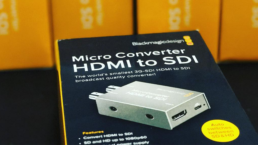
I rented roughly 20 additional cameras from Magnanimous in Chicago. I hired freelancers across multiple departments. Camera operators. Audio crews. Production managers. Setup teams. Breakdown crews. By the time everything was staffed, coordinated, and operational, we had close to 30 or 40 people involved altogether. That experience taught me something important about growth: most companies do not magically become “big.” Sometimes you become big because the opportunity forces you to operate bigger than your comfort zone. And honestly, for the most part, the event went incredibly well. The client was thrilled. Rooms were operational. Livestreams worked. Audio worked. Crews stayed coordinated. Problems got solved quickly. The kind of conference where attendees never fully realize how much controlled chaos is happening behind the scenes to make everything feel seamless. I remember my point of contact joking throughout the week, saying, “That’s my Malcolm,” every time another issue got resolved before becoming visible to the client. By the end of the conference, they were already talking about future events overseas. The Dubai Conference had even entered the conversation.
For a small production company, it felt like crossing into another level.
Then came the interviews. Part of the production involved filming dozens of sit-down interviews throughout the week. Around 65 interviews total. Most running roughly 45 minutes each. For that portion of the project, I hired a veteran freelancer with decades of experience in production. Old-school television background. The type of person whose résumé immediately commands respect. And almost immediately, we disagreed creatively. The disagreement was over lighting and color temperature. My philosophy has always been simple: protect the image first. If footage is slightly cold, you can warm it up later in post-production. Modern workflows give you flexibility. You preserve detail. You preserve highlights. You preserve skin texture. But once footage becomes too hot, once highlights clip, once skin tones lose information, there is only so much recovery possible afterward. Audio works the exact same way. Once audio clips, it clips forever. But his philosophy came from an older generation of production where the goal was to make footage look “finished” directly out of camera. Warm tones. Bright image. Minimal color correction later. He kept insisting the image would look too blue otherwise. I disagreed.
But eventually, I deferred to his experience. And that decision stayed with me for years.
Because when the conference ended and we began reviewing footage, every single interview came back too hot. Every one. I remember sitting in post-production sick to my stomach because I already knew what had happened before I even opened half the files. We salvaged what we could. We corrected what we could. We delivered professionally. But the footage never became what it should have been. And we did not get the following year’s contract. Now, to be clear, I do not tell this story to blame someone else. Leadership does not work that way. At the end of the day, the responsibility was mine because I allowed myself to abandon my own workflow instincts simply because someone else had more years of experience. That conference taught me one of the most important lessons of my career: Experience and accountability are not the same thing. Someone can have more years in the industry and still not understand your workflow, your standards, your delivery expectations, or the realities of modern post-production. Especially if they are not the person sitting in the edit afterward trying to recover the footage. And as your company grows, this becomes one of the hardest parts of leadership. People will constantly try to override your instincts with confidence, titles, résumés, or authority. Sometimes they are absolutely right. Sometimes they know far more than you in specific areas. But leadership also means knowing when not to abandon the systems and instincts that helped you win the contract in the first place. Ironically, that conference became one of the most important growth moments of my career.
Not because it was flawless. But because it proved something to me. A small production company could absolutely operate at a national conference level if the systems, preparation, and leadership were strong enough. And more importantly, I learned this:
Never hand over your instincts simply because someone else has been doing something longer than you.

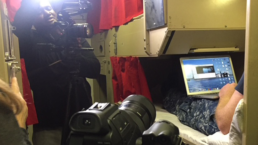
Three Cameras. One Navy Bunk. No Room for Error
Yesterday, while digging through roughly 54 terabytes of archived footage and backups,
I came across a series of photos from an old shoot. It stopped me for a second. The shoot was on a Navy ship, and I remember it clearly because it was probably one of my first real government productions. What stood out wasn’t the client name or even the final video. It was the environment. The client wanted a three-camera interview setup, full lighting, clean audio, and boom mics… inside a space barely bigger than a two-person dining room table. Tight hallways. Metal walls. Limited movement. No room for error. Looking back at those photos reminded me of something I’ve learned after a thousand-plus shoots over the years.
The shot matters.
Clarity matters.
Sound matters.
Creativity is always a plus, but bad audio and soft focus will destroy a project faster than a “cinematic” shallow depth of field ever will. People will forgive simple. They will not forgive unusable. Over the years, I’ve filmed almost everywhere imaginable. Underwater. On trains. In planes. Hanging out of vehicles. Conference rooms. Factories. Courtrooms. Tiny offices. Massive stages. At this point, probably everywhere except the moon. What experience teaches you is that production is less about being flashy and more about being calm, deliberate, and dependable under pressure. One of my favorite lines comes from Remember the Titans when Denzel Washington says:
“I run six plays, split veer. It’s like Novocaine. Just give it time, it always works.”
That line stuck with me throughout my career. You do not always need the newest camera, the flashiest setup, or the most complicated creative approach. Sometimes the real skill is understanding your craft well enough to adapt to any environment and still deliver something clean, professional, and reliable.
That’s the real lesson from the field.

Live Stream in New York City
Every project teaches you something. Sometimes it’s about production. Sometimes it’s about people. Sometimes it’s about pressure, leadership, communication, or just how fast things can go wrong. This is another story from the field.
One thing this industry teaches you really fast is that no matter how much you prepare, live production does not care about your confidence. It will humble you instantly. And this is one of those moments I still think about. We were hired to provide production, audio, and livestream support for a very prominent senator at the Marriott in Times Square, New York City. Big ballroom. Big crowd. Big livestream. I think somewhere around 122,000 people tuned in live. At the time, it was probably the biggest livestream I had personally handled. Understand, we’re based out of Washington, DC, but we had done New York shoots before. Conferences, interviews, corporate events. Nothing too crazy. So the night before the event, we did what every good production crew does: we prepped early. We got into the ballroom around 8 p.m., wired everything up, tested all 12 wireless microphones, checked frequencies, monitored audio, verified the livestream feed, the whole thing. Everything sounded perfect.
And that was the problem.
What I didn’t understand at the time was that 11 p.m. RF traffic in Times Square is not the same as 8 a.m. RF traffic in Times Square. At 11 p.m., the room was relatively quiet electronically. By morning, New York woke up. News crews, hotels, wireless devices, cell phones, broadcast traffic, security systems, everything around us exploded. The event starts. We go fully live. Within seconds, the wireless microphones start dropping out completely. And when I tell you panic hits fast during a livestream, I mean fast. You suddenly hear people in the livestream comments saying they can’t hear anything. The chief of staff is speed-walking toward the back of the room looking directly at us. My audio engineer looked at me with pure panic in his eyes because he couldn’t immediately isolate the issue. And the crazy thing is, in my memory, this whole moment felt like five minutes.
In reality, it was probably twenty to thirty seconds.
But thirty seconds during a live event with over a hundred thousand viewers feels like forever. Now, the night before, my crew and I had a debate. Some of the guys didn’t want extra wired microphones on stage because it meant more setup, more cable management, more complexity. The client specifically requested wireless mics for everybody, which made sense. Cleaner stage. Easier movement. More professional appearance. But somewhere in the back of my head, something from my UPS days kicked in. UPS drilled one lesson into us constantly: plan for the best, expect the worst. So I made the call anyway. Every single wireless microphone had a corresponding wired microphone hidden underneath the tables using Velcro mounts. We ran every backup line into the mixer ahead of time, muted them, and left them ready in case everything failed. Nobody in the audience knew they existed except us. So while everybody else was panicking, I remember telling my audio guy, “Get up. We’re switching.” We immediately transitioned to the wired backup microphones we had already staged. The senator kept talking, audio came back, and the event recovered before most people even fully understood what happened. And honestly, that moment taught me one of the biggest lessons of my career. Clients hire you for the result, not the excuse. The customer asked for wireless microphones, and we gave them wireless microphones. But my responsibility as the production company was also to think beyond the request and ask myself one question: what happens if the technology fails?
Because eventually, technology always fails. That experience changed how I approach production permanently. Redundancy matters. Backup plans matter. Calm under pressure matters. And sometimes the difference between disaster and professionalism is one uncomfortable decision you made the night before that nobody else understood at the time.

How AI is Changing Social Media Marketing for Businesses
How AI is Changing Social Media Marketing for Businesses
Social media marketing has entered a new chapter with the rise of artificial intelligence (AI). Businesses are now equipped with tools that analyze data, predict trends, and streamline interactions with audiences. This isn’t just about making tasks easier—it’s about reshaping how businesses connect with their customers.
One of AI’s biggest contributions is its ability to make marketing decisions smarter. Tools like Sprout Social and Hootsuite Insights provide insights into what audiences like, when they’re most active, and what content performs best. Instead of guessing what might work, marketers can rely on these tools to make informed choices.
AI also improves how content is created and shared. Personalized content used to be reserved for brands with massive budgets, but now platforms like HubSpot and Adobe Experience Cloud make it easier to customize messages for different segments of an audience. For example, an AI tool can analyze past interactions to determine what type of post is likely to get the most engagement, whether that’s an eye-catching image or a practical how-to guide.
Trend prediction is another area where AI excels. Platforms like BuzzSumo can identify topics gaining momentum before they hit the mainstream. This allows businesses to stay relevant without feeling reactive or outdated. Combined with content generation tools like Jasper and Copy.ai, marketers can quickly produce material that fits current conversations without sacrificing quality.
On the engagement side, AI-powered chatbots have become essential for brands of all sizes. Tools like ManyChat and ChatGPT integrations enable companies to answer customer questions quickly and naturally. These bots aren’t just about saving time; they make it easier for businesses to maintain a consistent presence on social media without being overwhelmed by messages.
Social listening tools, such as Brandwatch, allow businesses to track what people are saying about their brand or products online. This isn’t just useful for damage control; it’s also a way to understand customer sentiment and adapt strategies in real time. By knowing how their audience feels, businesses can make adjustments to build stronger connections.
Still, adopting AI doesn’t come without challenges. Privacy concerns are at the forefront, as these tools rely on large amounts of data. Businesses need to ensure they’re transparent about how they collect and use customer information. Additionally, while automation is helpful, over-relying on it can make a brand seem robotic. Balancing automated processes with genuine human interaction is important.
For businesses interested in integrating AI into their social media marketing, starting small is often the best approach. Focus on a specific area, like content scheduling or customer service, and measure the results before expanding. Training team members on how to use AI tools effectively is also crucial to ensure they’re used to their full potential.
AI isn’t a magic solution, but it’s a powerful resource for businesses willing to adapt. It can improve the way brands interact with their audience, create content that matters, and stay ahead in a crowded digital landscape. The key is to use these tools thoughtfully, blending technology with the human touch that makes social media engaging in the first place.